
If you ask me [Joachim C Bartels] as the writer of this article and as a veteran in credit information, I am appalled by the apparent short memories within the credit system, the workings behind the curtain and lack of transparency.
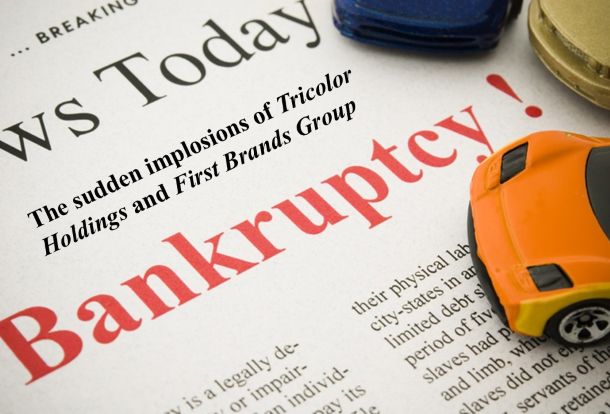
Seventeen years after the subprime collapse, the private-credit boom faces its own moment of truth. The sudden implosions of Tricolor Holdings and First Brands Group have ripped away the façade of calm that defined a $1.7 trillion market thriving on opacity. These are not random failures. They are early warnings; canaries in the coal mine of a system where yield-hungry investors, lenient underwriters, and silent rating agencies / credit information have recreated the very blind spots they once promised to eliminate.
 It would be prudent to ask about the role of the credit rating / information industry. Because most of the deals are not in the public domain, are negotiated privately, it can be assumed that the credit rating / information industry was not deeply involved in the credit assessment. However, based on research, there have been early warning signs long before the two events happened. Therefore, perhaps the canary did not sing loud enough or was thrown out with the coal somehow.
The $2.3 Billion Question
The First Brands saga has become the defining test case. What began as a quiet bankruptcy now resembles a forensic thriller: court filings by creditor Raistone allege that up to $2.3 billion in receivables simply vanished through double-factoring schemes and off-balance-sheet financing. The U.S. Trustee has joined calls for an independent examiner to uncover where the money went and who knew what. Jefferies, one of the largest creditors, disclosed roughly $715 million in exposure and said it believes it was defrauded.
The echoes of Enron, Global Crossing, and Wirecard are unmistakable. Complex factoring arrangements hid leverage, invoices were pledged more than once, and no one — from lenders to auditors — hit the brakes. When liquidity tightened, the illusion collapsed, leaving creditors fighting over fragments of cash flow.
Defaults & Exposures — 2025 YTD
| Metric | 2024 → 2025 | Source/Comment |
|---|---|---|
| U.S. Private-Credit Default Rate | 3.2 % → 5.5 % | Fitch Ratings |
| Covenant Quality Index | -15 % YoY | J.P. Morgan Tracker |
| Avg Loan Spread (vs SOFR) | +240 → +325 bps | LCD Market Data |
| Funds Suspending Redemptions | 6 → 11 | Preqin |
| U.S. Market Size | ≈ $1.7 trillion | Pitchbook/IMF |
Direct Lenders & Funds
| Jefferies Credit Partners | ≈ $715 mn (First Brands) |
| UBS Private Credit Fund | 30% portfolio tied to First Brands |
| Appollo / Ares / HPS | co-lending auto & supplier finance |
| Insurers (Credit) | 20 % privately rated tranches (NAIC) |
Tricolor’s Déjà Vu
Tricolor Holdings followed a different path but reached a similar dead end. It securitized subprime auto loans marketed as socially responsible finance. Rating agencies blessed the issues; investors chased the ESG label. But when loan data proved unreliable, the structure imploded. It is the subprime mortgage playbook rewritten for 2025: flawed collateral, inflated ratings, and faith in models that never met the borrowers they described.
No Red Lights
The most disturbing thread through both cases is the silence that preceded them. Ratings held steady. Auditors signed off. Private-credit funds—many open-ended and lightly regulated—continued to raise capital. In Fitch’s latest data, default rates in U.S. private credit have climbed to 5.5 percent, the highest since 2020. Spreads are widening, covenant quality is deteriorating, and some investors now demand examiner-style transparency before committing fresh money.
Senator Elizabeth Warren has called for federal stress tests of private credit and pressed rating agencies on inflated scores. The GAO has opened an inquiry into systemic risk in the sector. The NAIC’s Securities Valuation Office is rewriting rules to force detailed rationale reports for privately rated securities held by insurers. Sunlight, long deferred, may finally reach the shadow-banking heart of the system.
The Market Behind the Curtain
Private credit grew precisely because banks retreated. Funds filled the vacuum, promising flexibility and speed. But flexibility without disclosure is risk disguised as innovation. Unlike public bonds, private-credit instruments trade in the dark, no prices, no continuous marks, no unified oversight. That structure works only as long as confidence holds. Once investors suspect manipulation or missing collateral, funding dries up almost overnight.
Recent tremors extend well beyond the two bankruptcies. Fitch and J.P. Morgan warn of “selective defaults” spreading through mid-market portfolios. Regional-bank equities have wobbled on fear that their co-lending and warehouse exposures could transmit losses. The pattern is chillingly familiar: leverage, opacity, complacency—and surprise.
Déjà Vu, Again
The 2008 crisis taught hard lessons about transparency, discipline, and verification. Yet the allure of high yield and bespoke structures has led the market back to the edge. The private-credit model, once hailed as post-crisis innovation, now mirrors the vulnerabilities it was meant to cure. When oversight retreats, fraud follows the path of least resistance.
The red lights are flashing. Tricolor and First Brands are not anomalies; they are signals of deeper structural strain. As the $1.7 trillion machine creaks, investors and regulators face a choice: enforce sunlight now or confront contagion later. History’s verdict is already written trust but verify is not optional. In the world of private credit, darkness remains the greatest risk premium of all.
Source: Intrepid Explorers, LLC – Research