
Here we are, 17 years later, and the lessons from the Subprime Mortgage Crisis (2008) appear to have been forgotten. Worse yet, lax lending standards, “shades of Enron,” suspected fraud? Missing red warning lights!
The parallels to 2008 are not academic. They are a flashing red light. Subprime then, auto and supplier finance now — different vehicles, same disease. If the industry does not restore transparency and discipline, we risk stumbling into another cycle of denial, surprise, and panic.
- U.S. debt investors have raised the alarm over lax lending standards in credit markets.
- The sudden failure of Tricolor Holdings and First Brands raises questions about controls and early warning systems.
- Investors bear responsibility — but regulators cannot remain spectators. The SEC, the Fed, and global watchdogs must demand transparency.
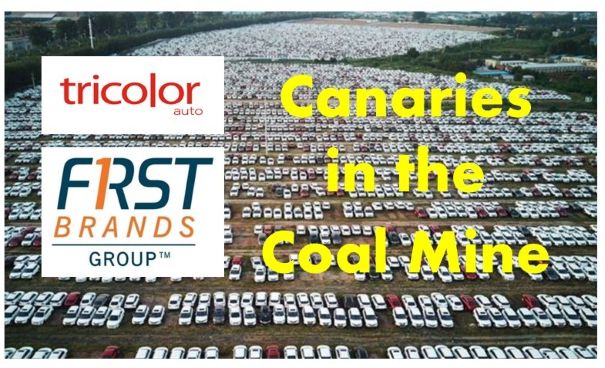
- If Tricolor and First Brands are the canaries in the coal mine, then investors, regulators, and rating agencies should be on high alert.
Two names tell the story: Tricolor Holdings and First Brands Group. Both were supposed to be safe bets in their niches. Tricolor positioned itself as an inclusive auto lender, even marketed as an ESG investment. First Brands was a respectable parts supplier with familiar product lines. Yet in quick succession, both collapsed under the weight of opaque financing and alleged fraud, leaving creditors stunned.
Tricolor’s downfall is déjà vu for anyone who remembers the subprime mortgage debacle. The company bundled auto loans into securities blessed by rating agencies. But those ratings relied on the borrower’s own reporting. Once questions surfaced about the integrity of that data, the entire edifice crumbled. A billion-dollar enterprise imploded, and lenders discovered that “investment grade” is no defense against cooked books.
First Brands followed a different playbook but ended in the same place. The company piled up off-balance-sheet supplier financing and invoice factoring, making its true leverage invisible. When it sought to refinance, investors balked. Affiliates are now in bankruptcy, creditors fighting over scraps. In style if not scale, it resembles Enron: hiding debt until the market forced a reckoning.
What makes these cases so unsettling is not just the fraud, but the silence that preceded it. No red lights! Rating agencies did not sound alarms. Lenders waved through covenant-lite terms. Investors hungry for yield ignored opacity. We were supposed to have learned this lesson in 2008: trust but verify, dig into the data, never outsource judgment to ratings alone. Yet here we are, 17 years later, blindsided again.
The private credit market has ballooned into a $1.5 trillion colossus. It thrives on opacity, limited disclosure, and bespoke structures beyond public scrutiny. That model works until confidence cracks.
History’s warning is clear. Fraud does not remain isolated; it spreads wherever oversight is weakest. Yield is never free, and the cost of complacency is always higher than advertised. Investors bear responsibility — but regulators cannot remain spectators. The SEC, the Fed, and global watchdogs must demand sunlight in private credit before the flashing red light turns into another full-blown crisis.
Source: Commentaries from the Financial Times¹ / Financial Times² / Financial Times³