
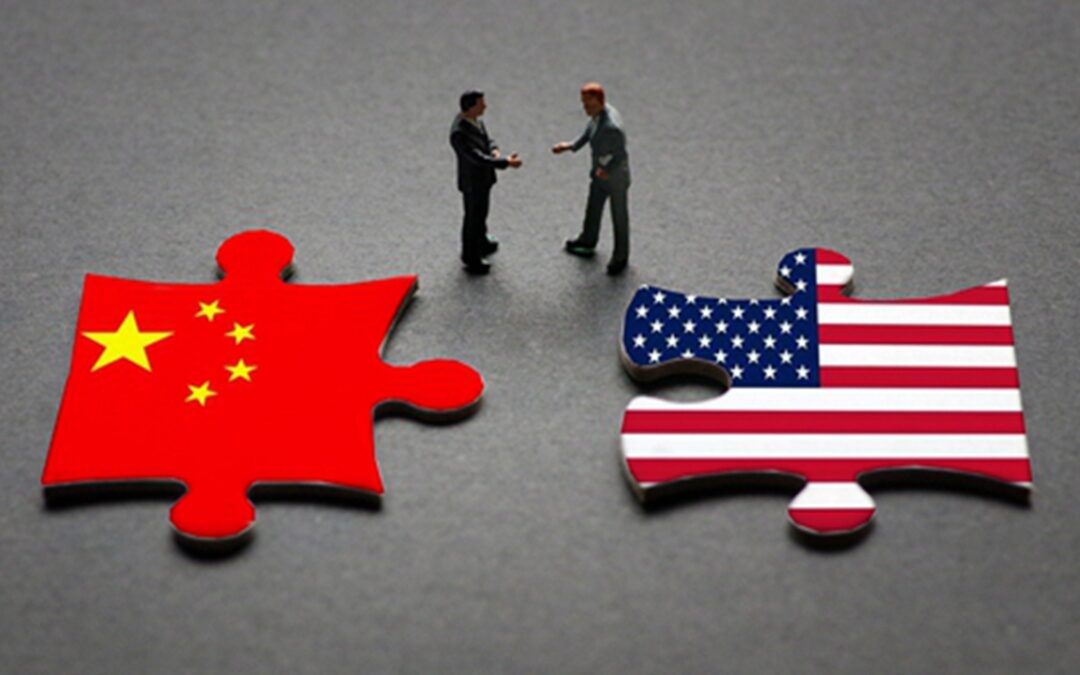
China and the United States are making progress in their trade talks.
The two sides said last week that they had reached agreement on how to implement the trade framework negotiated in London earlier this month. Under the latest agreement, Beijing will expedite rare earth exports to the U.S., while Washington will lift a series of restrictive measures imposed on China.
Beijing hopes that the U.S. side will meet China halfway, the statement said. The two sides should aim to continuously enhance consensus, reduce misunderstandings, strengthen cooperation, and jointly promote the sound, stable, and sustainable development of China-U.S. economic and trade relations, it added.
Editorial Comment: It appears that ‘misunderstandings’ may have played a considerable role in the delay of reaching agreements. The trade talks are multi-faceted, they involve tariffs (monetary), non-tariff trade barriers (product standards, safety or environmental requirements), plus elimination of trade deficits. These discussions are complex and often take more than a couple of months to reach legal agreements.
China and the EU: Although the media appears to be focusing almost on what is called as Trump’s Trade War, in contrast, trade friction between China and the European Union has escalated over the public procurement of medical devices. Beijing has accused the EU of unilaterally erecting new trade barriers and threatened countermeasures after Brussels banned Chinese companies and products from taking part in EU government medical device tenders exceeding 5 million euros ($5.8 million).
Source: Caixin Global
Nike to cut China footwear output to counter $1 billion tariff hit
Nike Inc. is undertaking a major overhaul of its global supply chain to reduce its reliance on Chinese manufacturing for footwear destined for the U.S. market. The move comes as the sportswear giant faces mounting tariff pressures and falling sales.
Currently, China accounts for about 16% of Nike’s footwear imported into the United States, Matthew Friend, Nike’s chief financial officer, said during an earnings call on Thursday. The company wants to cut that figure to a “high single-digit percentage range” by May 2026, shifting production to other countries to offset rising tariff costs.
Editorial Comment: In a recent statement Nike indicated that it takes up to two years or more to relocate production. The relocation of production, from one country to another, requires a significant amount of due diligence in determining local environmental/economic conditions and potential supplier competency. A great opportunity for the business information industry to supply the necessary information.
Source: Caixin Global