
 If You Ask Me…
 If You Ask Me…
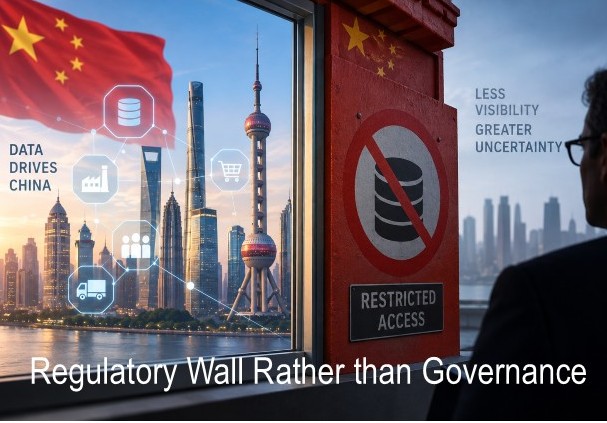
China is closing the window on commercial trust at precisely the time when everyone in commerce is looking for greater trust—in data, in relationships, and through greater transparency, cybersecurity and governance.
Two recent announcements from China make me question whether these objectives can be achieved when dealing with China—and whether there remains sufficient common ground even for an open discussion about AI governance.
Point One: When Does Research Become Intelligence Gathering?
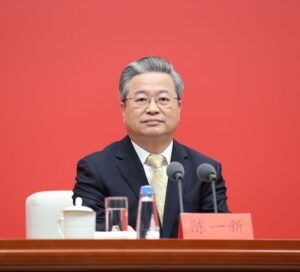 China’s Minister of State Security, Chen Yixin, has provided an important indication of how the government views artificial intelligence.
Chen warned that foreign intelligence organizations are using smart web crawlers and AI-driven data mining to obtain China’s critical data, commercial secrets and personal information.
There are legitimate security concerns behind that warning. No country should be indifferent to espionage, cyberattacks or the theft of commercial secrets. But the implications for legitimate commercial information gathering go considerably further.
Point Two: Is the Regulatory Boundary Moving Beyond Data?
China has now introduced broader controls over overseas travel that explicitly link exit restrictions to violations involving technology transfers and potential threats to industrial or technological security. The rules can reach technology executives and researchers as well as government and public-sector personnel, while their broad wording may discourage travel even where no formal prohibition has been imposed.
This takes the issue one step beyond the movement of data. Knowledge also travels with people. If national security increasingly encompasses not only information and technology but also individuals possessing specialized knowledge, the emerging boundary becomes considerably wider. For international business, the question is therefore no longer simply whether data can cross borders, but whether the knowledge derived from it—and in some circumstances the people possessing that knowledge—can move freely as well.
If You Ask Me…
Point One brings us back to the question: When does research become intelligence gathering?
A regulatory wall has been building in China for some time. No single regulation created the situation. The boundaries have been constructed gradually.
China’s Cybersecurity Law was followed by the Data Security Law and Personal Information Protection Law. The Counter-Espionage Law was expanded, while cross-border data transfers became increasingly regulated. Foreign consulting and due-diligence companies then discovered that activities previously regarded as normal commercial information gathering could attract national-security scrutiny.
In 2026 another layer was added. China’s new supply-chain security framework extended national-security considerations further into commercial supply chains and information gathering. We have written recently about this development.
The recent warning by Minister of State Security Chen Yixin adds a further dimension to this growing dual-compliance trap. It makes the boundary between legitimate commercial research and what Chinese authorities may regard as intelligence gathering increasingly difficult to determine.
Under these circumstances, obtaining sufficient Trusted Data on some Chinese corporate entities may become increasingly difficult. For investors, lenders and exporters, the old adage Caveat Emptor may acquire renewed relevance.
Point Two raises another question: Is the regulatory boundary moving beyond data?
The latest travel restrictions suggest that it is. They also remind us of another dimension of trust that technology sometimes causes us to overlook: Trusted Data is not sufficient. Commerce also depends on human trust.
Most commercial transactions are not isolated events between strangers. Buyers and sellers frequently deal with each other repeatedly over many years. Suppliers learn how customers behave. Buyers learn whether suppliers deliver what they promise. Executives negotiate face to face. They discuss problems, understand each other’s risks and gradually establish confidence. Ultimately, humans still make many of the final credit and commercial decisions, and their judgment is also informed by personal experience.
Long before we spoke about Trusted Data, commerce depended upon trusted relationships. An old Dun & Bradstreet expression captured it remarkably well:
“Credit is Man’s Confidence in Man.”
In Conclusion
In market-oriented economies, legitimate credit information has long been recognized as part of the infrastructure supporting commerce rather than being equated with espionage. Public-sector information infrastructures—corporate registers, disclosure requirements, court and insolvency records and other public records—exist in part to create transparency for investors, businesses and the public. Credit bureaus and commercial information companies operate within legal, regulatory and professional standards designed to balance access to information with privacy, security and other legitimate interests.
China’s economic opening succeeded in considerable part because businesses were progressively able to establish commercial relationships, exchange information, travel, trade and make their own assessments of opportunity and risk. Artificial intelligence should theoretically improve that process by transforming enormous quantities of legitimate data into better information, better risk assessment and ultimately better decisions.
Yet China increasingly appears concerned about precisely the same capability—the ability to collect information, connect previously separate facts and derive new knowledge from them. That leaves us with a paradox. At precisely the moment when international commerce is demanding more transparency, better governance and more trusted information, China appears to be placing additional boundaries around the mechanisms through which commercial trust is created.
If you ask me, the issue therefore reaches far beyond AI governance. It comes back to something the financial services industry and the credit information industry understood long before artificial intelligence existed: credit and information are intertwined.
Restrict the information, and eventually you may restrict credit. Restrict credit, and you risk restricting commerce itself.
 Sources: Caixin Global, Financial Times, further research by Intrepid Explorers, LLC supported by ChatGPT.
Recommend also read: China’s New Economic Defence Architecture: Information Sovereignty and the Fragmentation of Global Transparency